
I still remember the exact moment I almost quit building with large language models.
It was a Tuesday night in Boise. I had spent three days wiring up what I thought was a clever internal research assistant for a small consulting client. The demo looked polished. The agent could search a knowledge base, pull sources, and draft a summary. In the meeting it even impressed the two people who mattered. Then we fed it a real customer document that contained a slightly messy table and a couple of ambiguous acronyms. The agent confidently invented a citation that did not exist, skipped a critical constraint the client had written in bold, and suggested an action that would have violated their data-retention policy. When I opened the logs, the chain of tool calls looked like a drunk person trying to open every drawer in the kitchen at once.

I sat there staring at the terminal and thought: this is the part nobody talks about in the glossy “ship AI in a weekend” posts.
That night I deleted most of the agent code, wrote a short test plan on a sticky note, and rebuilt the smallest useful version that could actually fail in ways I could measure. The new version did less. It was also the first version the client could trust enough to put in front of real work. That experience is why this site exists.
Context & Tools is not another place that announces the latest model release and then disappears until the next one. It is a working notebook for developers, indie hackers, and small technical teams who want to build reliable applications with Anthropic’s models instead of just chatting with them. The central promise is simple and I will keep repeating it:
Build the smallest useful version, then test what breaks.
Everything else on this site flows from that sentence.
Who This Is For (and Who It Is Not For)
If you are looking for daily model rankings, dramatic capability claims, or “Claude just replaced my entire team” content, you will be happier somewhere else. Those posts already exist in abundance.
This site is for the people who have already read the official Anthropic documentation, tried the quickstarts, and then hit the gap between “it works in the playground” and “it survives real traffic, real data, and real failure modes.” That gap is where most of the actual engineering lives.
I write primarily for:
U.S.-based software developers and indie hackers who are shipping products, not just prototypes
Technical founders and small teams that need document processing, internal tools, or workflow automation without hiring a dedicated AI research group
Engineers who care about cost, latency, observability, human review points, and what happens when the model returns something unexpected
You already know how to call an API. What you want is the part that comes after the happy path: how to structure context so the model stays on the rails, how to design tool use so the agent does not spiral, how to evaluate whether the output is actually good enough, and how to deploy the thing without waking up to a surprise invoice or a privacy incident.
A Short Origin Story
I spent the first part of my career building ordinary backend systems—Python and TypeScript services, PostgreSQL schemas, authentication flows, background jobs, the unglamorous work that keeps SaaS products running. When I started experimenting with language models I brought the same habits with me. That turned out to be useful. Most of the early agent frameworks I tried felt like they were designed for demos first and production second. They made it easy to look impressive and easy to create uncontrolled loops, duplicated actions, and quiet failures.
After enough of those quiet failures I stopped reaching for the biggest framework available and started asking a different question: what is the smallest piece of code that does the useful thing and still lets me see exactly what went wrong?
That question became a working method. It is also the editorial filter for everything published here. If an article does not help you build a smaller useful version or understand what breaks when you test it, it does not belong on this site.
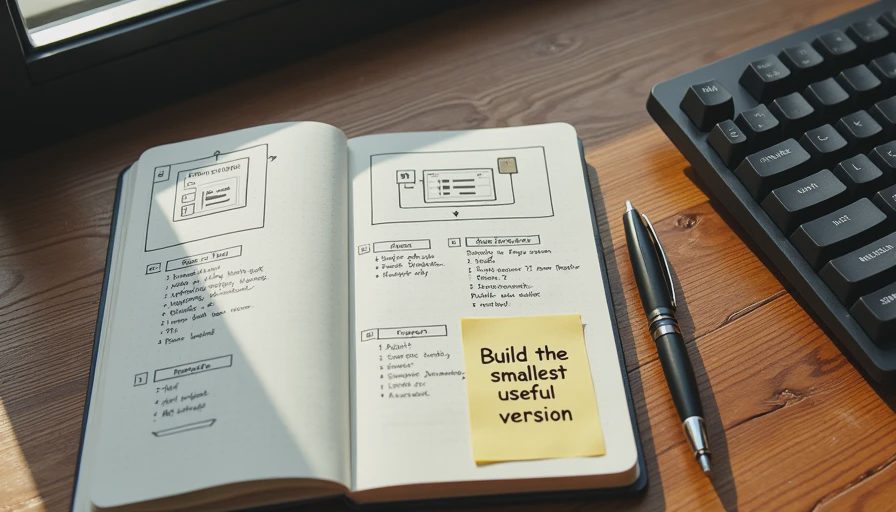
I live in Boise, Idaho. I hike the foothills when the weather cooperates, keep a private repository of failed experiments that were too expensive or too brittle to maintain, and still write a short test plan before I write production code. I do independent AI development and occasional consulting for small teams. I am not a former Anthropic employee, I do not have privileged access, and I will never present a fictional project as a real client engagement. Trust comes from reproducible code, stated assumptions, observed outputs, and honest limitations.
What You Will Find Here
The content is organized around five practical categories that match the work most teams actually need to do:
Anthropic-5 Foundations
The boring, essential material: authentication, environment setup, message structure, context windows, model selection trade-offs, structured responses, and error handling that does not rely on guessing. These posts exist so later tutorials can assume a shared baseline instead of repeating the same setup steps.
Agents and Tool Use
How to build tool-using assistants that stay bounded. Agent loops, approval steps, search tools, database actions, routing without over-engineering, and the concrete failure modes that appear the moment you leave the demo environment.
Production Workflows
Complete patterns for document review pipelines, human-reviewed triage, internal research assistants with source tracking, background jobs, retries, and audit logs. These are not toy examples. They are the shapes that survive contact with real documents and real operators.
Testing, Evaluation, and Debugging
How to build small evaluation sets, validate structured output, measure latency and cost in the same experiment, and walk through a failed agent using traces. Testing an agent is different from testing a chatbot. We treat that difference seriously.
Deployment and Consultant Notes
Secrets management, observability that does not store sensitive user data, cost estimation before you build the full feature, production readiness checklists, and the kinds of automation projects I would refuse to ship without human review. These posts are written from the perspective of someone who has to hand systems off to small teams that do not have dedicated platform engineers.
Every major tutorial should eventually link to a setup guide, a conceptual explanation, a troubleshooting article, and a production checklist. That is the long-term structure. The first twenty posts are already planned around that spine.
How I Write These Articles
I try to write the way a patient senior developer would talk while sitting next to you at a desk:
Show the implementation before making broad claims.
Explain why a design choice was made, not only which code to copy.
State model versions, dependencies, costs, failure cases, and security trade-offs.
Separate observations from assumptions.
Update the article when the API or SDK changes.
You will see the same rhetorical moves appear again and again:
“Let’s start with the smallest useful version.”
“Here is what this code does—and what it does not do.”
“Before adding another framework, test this failure mode.”
“The demo works. Now let’s see whether it survives real input.”
“Build the smallest useful version, then test what breaks.”
I will not call every new capability revolutionary. I will not publish benchmark numbers without the test conditions that produced them. I will not treat a successful prototype as proof that the system is ready for production. When I am uncertain, I will say so.
What Success Looks Like for This Site
If this site is working, a developer who arrives with a concrete problem—document summarization that must return valid JSON, an agent that needs a human approval gate, a cost estimate before building a feature—should leave with a working minimal path, a clear list of things that can still break, and enough understanding to extend or defend the design.
I do not need the articles to go viral. I need them to remain useful six months later when the model names have changed and the SDK has moved on. That is a harder target than chasing the next announcement cycle, but it is the only target that matches the way real software is maintained.
A Practical Invitation
If you are currently wrestling with an Anthropic application that works in the playground and falls apart under real conditions, start with the smallest useful version of the thing you actually need. Write down what “useful” means in one or two sentences. Then deliberately try to break it. The failures you discover will teach you more than most framework documentation.
That is the method I use. It is the method this blog will keep returning to.
The next post will be concrete: a minimal Anthropic API request in Python that actually works, with the environment setup, the exact request shape, and the failure modes you should expect. After that we will move through authentication, message structure, and the first tool-using agent.
Until then, keep the sticky note nearby.
Build the smallest useful version, then test what breaks.



No feedback yet — submit the first.